1 hr 30 min
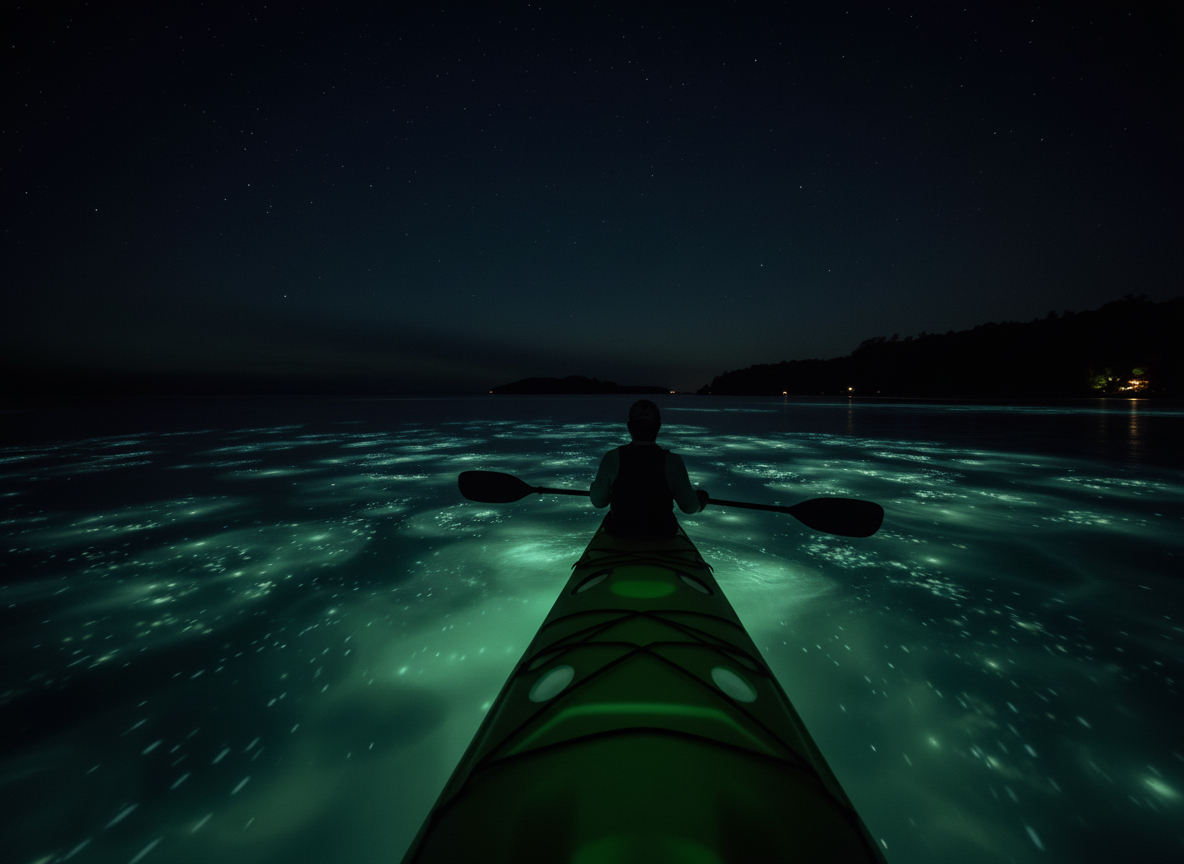
Bioluminescent Kayaking Adventure in Paquera
Paddle through glowing waters in the Gulf of Nicoya and witness nature's light show up close
Reserve
Paddle through living light, where every stroke ignites the water
Hand-picked by our editors — only the best 4 kayak operators from 12 reviewed.
Verified partners for Paquera Bioluminescence tours, free cancellation where available, and instant confirmation on every booking.
1 hr 30 min
Paddle through glowing waters in the Gulf of Nicoya and witness nature's light show up close
Reserve
11 hr
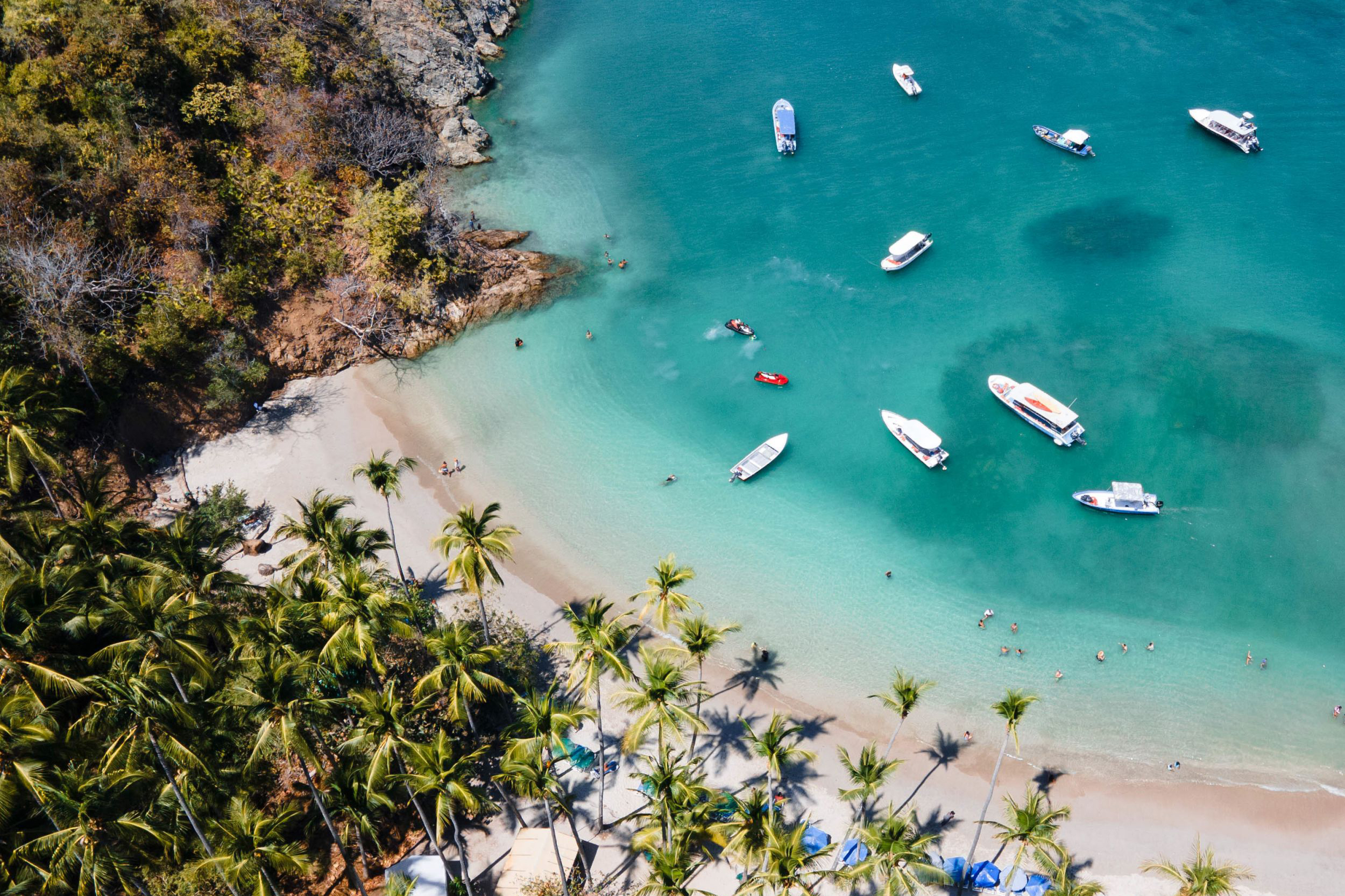
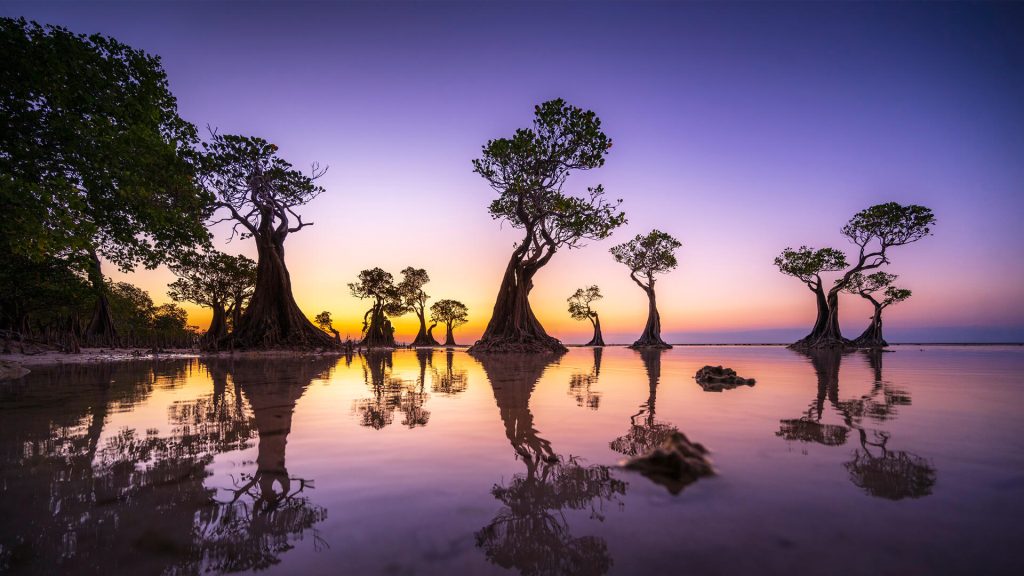
Cruise the Gulf of Nicoya to a pristine island paradise with dolphin spotting, snorkeling, and a fresh lunch
Reserve
5 hr
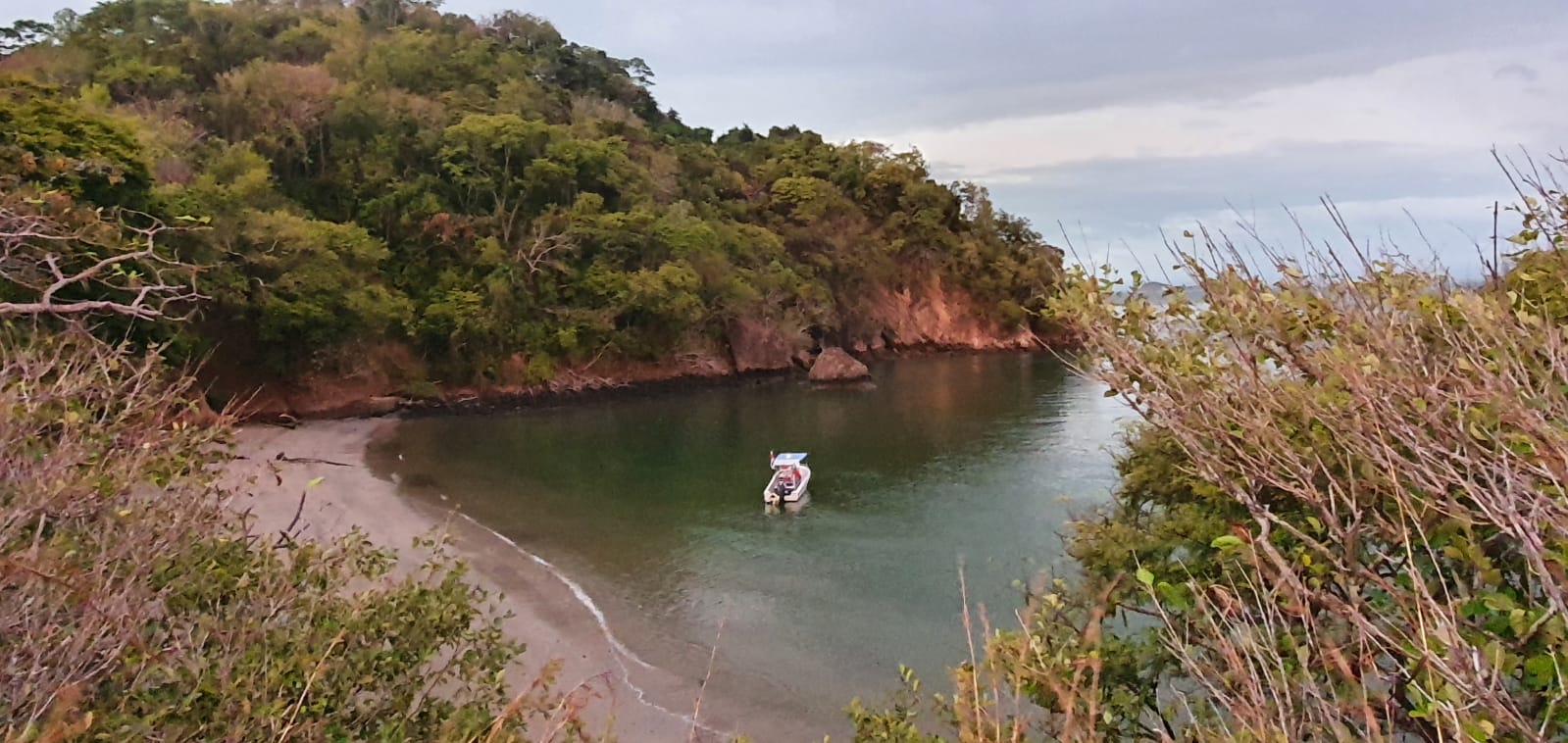
Speed across the Gulf of Nicoya to a pristine island beach with snorkeling, lunch, and time to unwind
ReservePrices from verified partners. Availability updates in real time at checkout. Free cancellation policies apply where shown.
Every Paquera Bioluminescence tour side-by-side — duration, what's included, how you redeem.
| Experience | Duration | Rating | Skip-the-line | Guide | Small group | Free cancel. | Price | |
|---|---|---|---|---|---|---|---|---|
|
Standard Entry Most popular
Bioluminescent Kayaking Adventure in Paquera
|
1 hr 30 min | ★ 4.5 | — | ✓ | — | ✓ | €30 | Book → |
|
Guided Experience
Tortuga Island Day Trip with Snorkeling & Beachside Lunch
|
11 hr | ★ 4.6 | ✓ | ✓ | ✓ | ✓ | $115 | Book → |
|
Guided Experience
Isla Tortuga Speedboat Excursion with Beachfront Meal
|
5 hr | ★ 4.5 | ✓ | ✓ | ✓ | ✓ | €69 | Book → |
All prices from verified partners. Availability and exact terms confirmed at checkout.
They complement each other, yet most visitors find the Paquera bioluminescence tour more accessible due to its direct proximity to major transit routes. Choosing between these coastal destinations depends on whether you prioritize convenient port access or a more remote, tranquil water experience.
| Feature | Top pick Paquera | Tambor Bay |
|---|---|---|
Launch point |
Paquera Ferry Port | Tambor Beach or hotels |
Accessibility |
High (ferry adjacent) | Moderate (requires transit) |
Average group size |
8–15 participants | 4–10 participants |
Common tour vessel |
Kayak or small motorboat | Kayak only |
Distance from ferry |
0 km (at port) | 15–20 km |
| See tickets → |
Verdict: If you seek an efficient paquera bioluminescence tour tour, the ferry port location saves travel time, whereas the Tambor experience rewards those booking paquera bioluminescence tour tickets with a quieter atmosphere.
Choose your ticket, select your date, and reserve in under two minutes. Secure checkout handled by our verified partner.
Instant confirmation by email, with a mobile voucher you can save offline. No printing, no queuing at a collection desk.
Arrive at the entrance, show your voucher on your phone, and walk in. Most tickets include priority or skip-the-line access.
Practical details for Paquera Bioluminescence tickets straight from our verified partners — hours, access, rules, and how to get there.
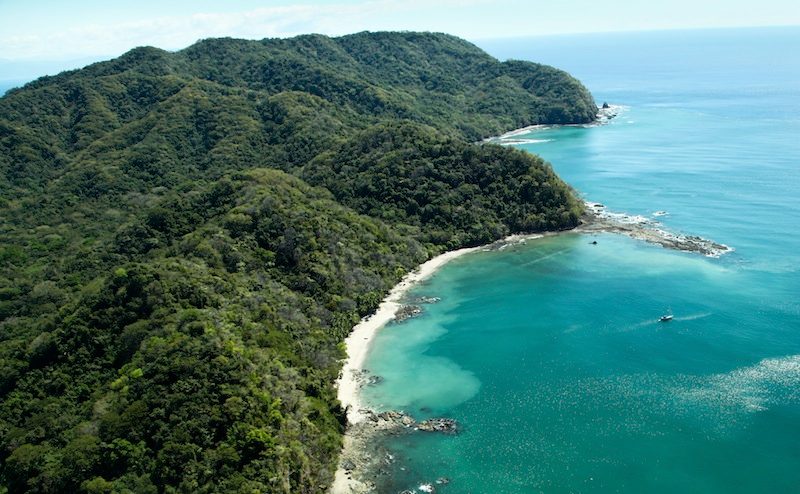
Paquera, Gulf of Nicoya, Costa Rica
Walk 100 meters to the right of the ferry landing
Open in Google MapsDrive to Paquera Ferry Port following signs for the ferry terminal
Wear light, comfortable clothing that can get wet, such as synthetic shirts or swimwear. Water shoes or secure sandals are recommended for boarding vessels.
Keep belongings minimal as space in kayaks and small boats is limited. Use waterproof bags for electronics and valuables.
Photography is possible but challenging in low light; use settings for night conditions. Many operators provide basic photos of the paquera bioluminescence tour experience.
Most departures occur from sandy beaches near the Paquera Ferry Port, requiring basic mobility to board kayaks or boats. Consult your specific operator for assistance.
Mobile phones are permitted for photos but should be stored in waterproof cases. Service may be limited on the water.
The paquera bioluminescence tour is suitable for children, though ages 3+ are generally recommended for kayak participation. Boat tours offer a more stable experience for families.
Most operators include bottled water and fruit after the tour. Alcohol is strictly prohibited before and during the excursion.
Pets are generally not permitted on group tours due to safety and wildlife protection policies.
The paquera bioluminescence tour is a nature-dependent activity; sightings vary based on moon phase. A dark night is ideal for the brightest plankton display.
Paquera, Gulf of Nicoya, Costa Rica
Walk 100 meters to the right of the ferry landing
Get directionsBest time to go, insider tips, nearby landmarks, and the cancellation fine print — flip through to skim what matters to you.
How crowds, weather, and events shift across the year.
Consistent visibility in the Gulf of Nicoya with calm waters
Small details that turn a good visit into a great one.
Reservations are essential to secure a spot on the most popular tours.
Non-bookable sights within a short walk — free to visit, easy to pair.
A quiet, scenic beach often used as the launching point for local excursions.
Flexible, no hidden fees.
Most operators allow cancellations up to 24 hours in advance for a full refund. Tours generally require a minimum number of participants to confirm.
Hand-picked options within walking distance — pick a district for vibe, or a specific hotel for convenience.
Convenient lodging near the ferry port for early or late arrivals.
The Gulf of Nicoya harbors one of Central America's most reliable bioluminescent zones, a consequence of nutrient upwelling where Pacific currents meet the continental shelf.
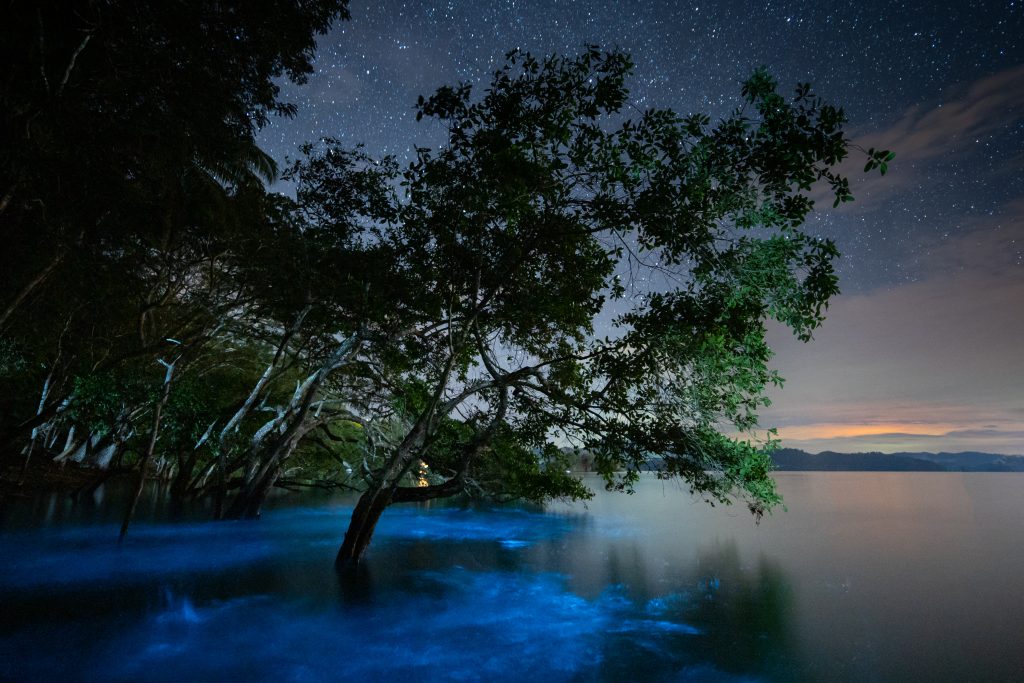
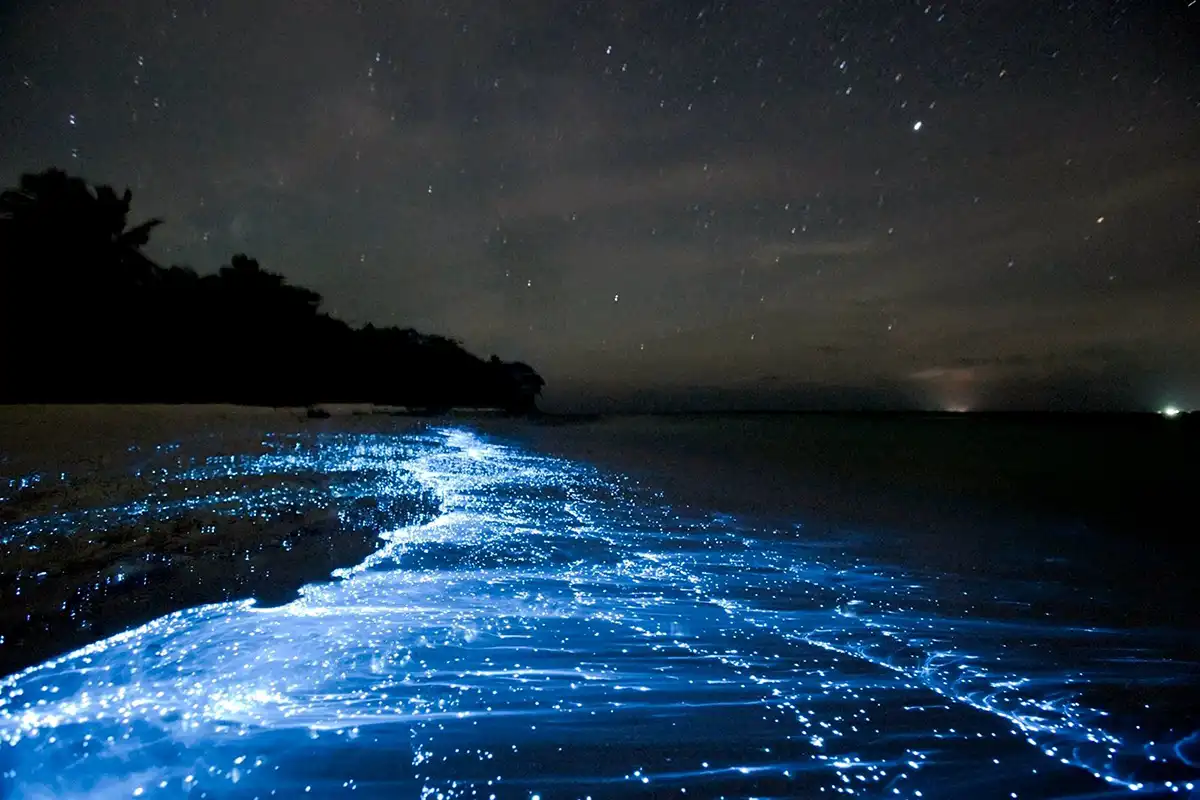
Dinoflagellate plankton—primarily Pyrodinium bahamense—concentrate in the bay's sheltered waters between Paquera and the Nicoya Peninsula's eastern shore, their populations peaking during the rainy months when river runoff delivers nitrogen and phosphorus into the gulf. Each microscopic organism contains luciferin and luciferase enzymes that trigger a cold blue-green flash when disturbed, a defense mechanism evolved over millions of years to startle predators. The phenomenon transforms ordinary paddle strokes into trails of living light, visible only after astronomical twilight when the human eye adapts to scotopic vision.
Paquera emerged as the primary launch point for bioluminescence kayaking in the early 2010s, after marine biologists from the Universidad de Costa Rica documented consistent plankton densities near the ferry port. The town sits at the terminus of Route 160, where the Puntarenas-Paquera ferry deposits vehicles and foot passengers onto the Nicoya Peninsula. Local operators began offering sunset departures around 2012, timing launches to coincide with the 30-minute window after civil twilight when residual sky glow fades and plankton luminescence becomes detectable. Unlike bioluminescent bays in Puerto Rico or the Maldives—where development and light pollution have dimmed the effect—the Gulf of Nicoya remains largely undeveloped along its eastern shore, preserving the darkness necessary for the phenomenon to register visually.
The kayak routes follow the coastline south from the ferry terminal, hugging mangrove estuaries where freshwater mingles with saltwater and plankton densities triple. Guides paddle in single-file formations, maintaining 10-meter intervals to allow each paddler's wake to illuminate independently. The water column glows brightest at 18–22°C, the temperature range that optimizes enzymatic reactions within the dinoflagellates. On moonless nights between June and November, visibility extends three meters below the surface, revealing schooling fish as streaks of neon and jellyfish as pulsing orbs. The effect intensifies in the bay's shallower pockets—depths of two to four meters—where plankton concentrate near the thermocline and paddle disturbance reaches maximum water volume.
Scientists classify the Gulf of Nicoya bioluminescence as a Class II system, denoting year-round baseline populations with seasonal surges. Rain-fed runoff from the Tempisque and Tárcoles watersheds injects dissolved organic matter into the gulf each May through October, fueling phytoplankton blooms that in turn support dinoflagellate reproduction. The plankton's 48-hour generation time means population spikes lag rainfall by one to two weeks, making late-season tours—September and October—statistically brighter than early-season departures. Water clarity, measured via Secchi disk depth, directly correlates with luminescence intensity: clearer water scatters less ambient light, rendering the bioluminescence more vivid against the black backdrop.

"Each microscopic organism contains luciferin and luciferase enzymes that trigger a cold blue-green flash when disturbed, a defense mechanism evolved over millions of years to startle predators."
A step-by-step walkthrough of Paquera Bioluminescence tickets — what you'll see, how long each stage takes, and the details that matter.
You arrive at the Paquera ferry port as the sun descends behind the Nicoya hills, the sky shifting from coral to indigo.
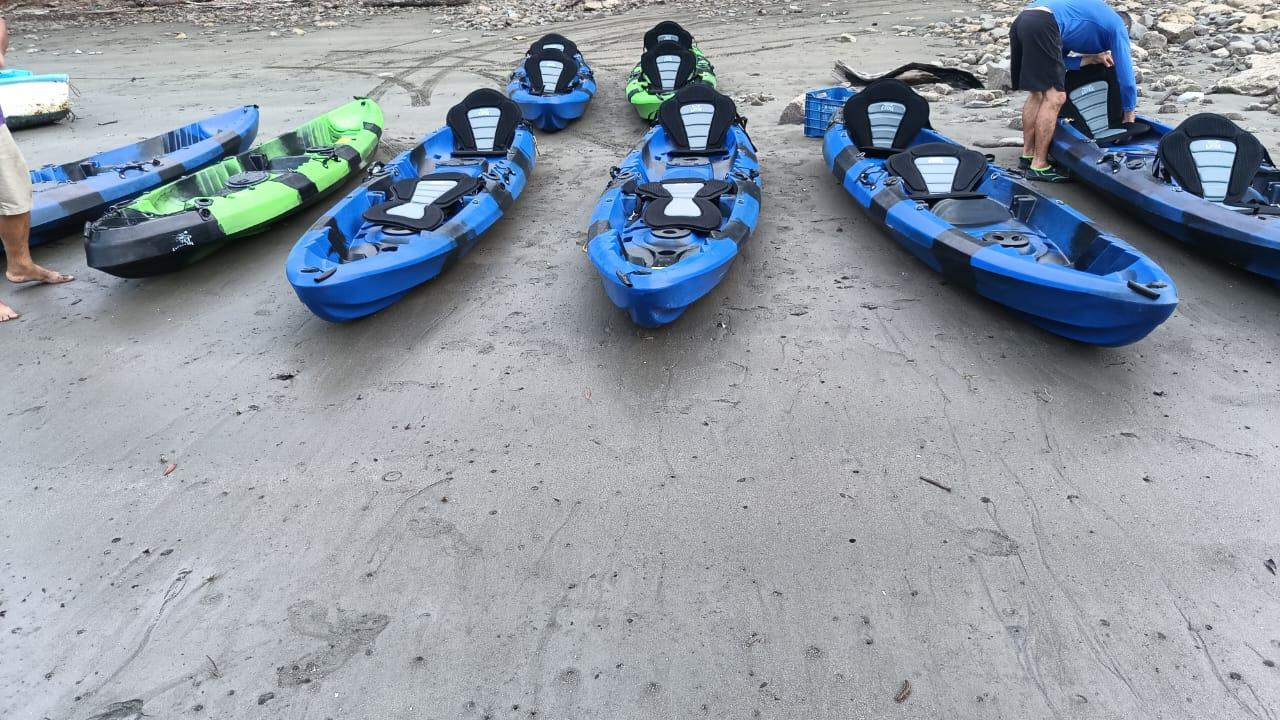
Your guide distributes life vests and two-blade paddles at the concrete boat ramp, then briefs the group on stroke technique—short, deliberate pulls that maximize water disturbance without splashing. You launch as the last ferry departs, the diesel rumble fading into the gulf's tidal hush.
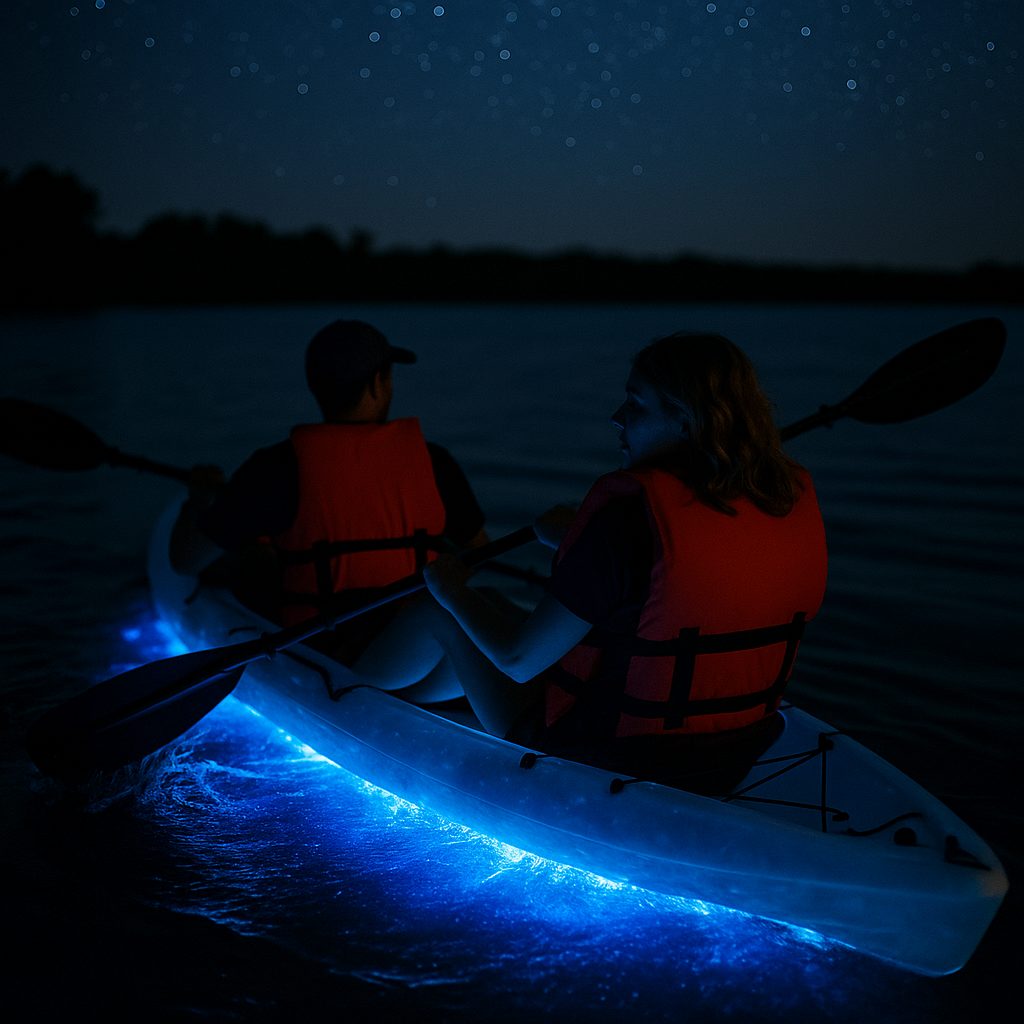
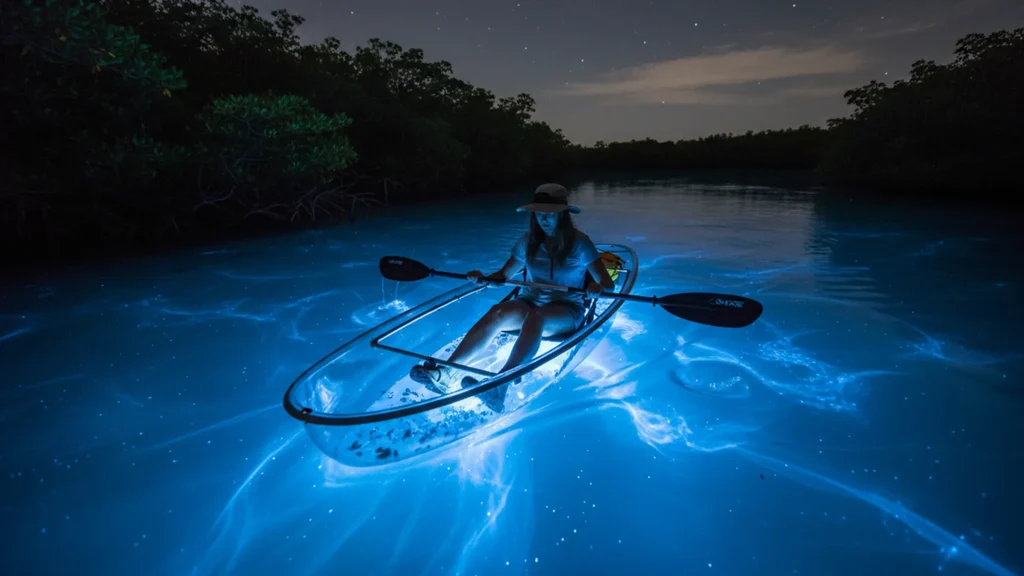
You paddle south along the mangrove fringe, your kayak's hull slicing through water that appears black under the dimming sky. For the first 15 minutes, you see nothing unusual. Then your guide stops, motions for silence, and drags a hand through the water. A comet-tail of blue-green sparks trails her fingers. You dip your own paddle and pull—suddenly the water erupts in phosphorescent swirls, each stroke leaving a glowing signature that fades over three seconds. You quicken your pace and the kayak's wake becomes a constellation, droplets falling from the paddle blade like liquid stars.
You drift into a shallow cove where the plankton density triples. You slap the water with your palm and the surface flashes as if lit by a strobe. Small fish dart beneath your kayak, their bodies outlined in neon trails. You lean over the gunwale and stare into the glowing column, mesmerized by the living light three meters deep. The group paddles in lazy circles, writing cursive patterns across the bay. After 90 minutes, you return to the ramp under a moonless sky, your forearms dusted with dried salt and your retinas still adjusting to the memory of blue fire.
Yes, many operators offer digital booking for the paquera bioluminescence tour.
The bay is accessible 00:00–23:59, but tours typically launch during the 17:30–19:30 window.
Yes, the paquera bioluminescence tour is family-friendly, though kayaking usually requires kids to be at least 3 years old.
Most tours range from $35–$45 USD per person.
Bring water shoes, a towel, and a change of clothes for your paquera bioluminescence tour.
No, there is 0 USD entrance fee for the bay itself; you only pay tour operators for access.
You can take the ferry from Puntarenas to the Paquera Ferry Port, then proceed to the meeting point.
Prohibited items on the paquera bioluminescence tour include flash photography, chemicals, and alcohol.
Yes, bioluminescence in the Gulf of Nicoya is visible throughout the year.
Yes, the intensity is lower during a full moon, so plan your paquera bioluminescence tour for dark nights.